
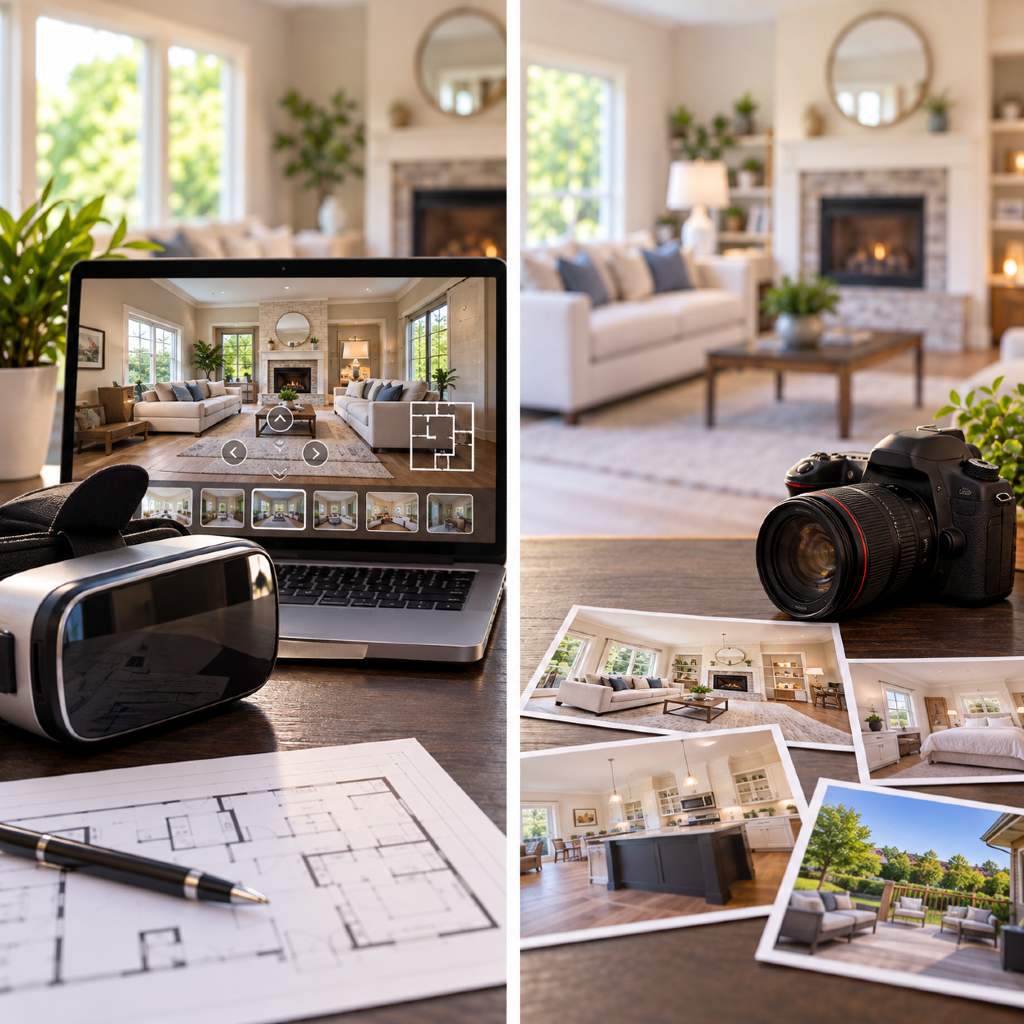
Key Takeaways
- 3D tours and photos each offer distinct benefits for showcasing homes online.
- Choosing the right visual approach depends on your property’s features and your likely buyers.
When selling your home, the way your listing appears online can shape buyers’ first impressions and influence their interest. Choosing between 3D tours and traditional listing photos is increasingly important as buyers start their search digitally. Here’s what you need to know to make a confident decision.
What Are 3D Tours in Real Estate?
3D tours are interactive presentations of a property that let potential buyers virtually ‘walk through’ the space, exploring each room just as if they were there in person. This tool has become popular in real estate for giving prospective buyers a deeper understanding of a home’s layout and features.
How 3D tours are created
3D tours are typically created using special cameras that scan rooms from several angles. These cameras use multiple lenses and, often, laser measurement to capture both visuals and spatial data. The images and measurements are then stitched together with software to create an immersive, navigable digital model of the home. Some systems allow you to move room-to-room, look around in every direction, and even measure virtual dimensions.
Typical features of 3D tours
A typical 3D tour lets you control where you ‘go’ in the house—such as clicking through hallways and zooming into areas of interest. Features might include interactive floor plans, the ability to view from different angles, and sometimes highlight tags that identify key features (like new appliances or custom finishes). All these elements combine to recreate the in-person experience as closely as technology allows.
How Do Standard Photos Work?
Standard listing photos are still the backbone of most home marketing strategies. They represent the property with still images aimed at showing off rooms, features, and the overall appeal of your home.
Types of listing photos
You’ll usually find a range of photo types in a property listing:
- Exterior shots, capturing curb appeal and landscaping.
- Interior photos of main rooms—kitchen, living, bedrooms, bathrooms.
- Special feature photos, like fireplaces, backyard patios, or upgrades.
Some listings may also use wide-angle images to convey spaciousness or highlight panoramic views.
Best practices for home photos
Great listing photos are bright, clear, and well-composed. It’s important to declutter, stage rooms, and photograph when natural light is abundant. Many professionals use high-resolution cameras and edit photos for color balance and sharpness. The order and selection of images matter, too; typically, the most appealing and spacious shots are used first to grab attention as buyers scroll.
What Are the Main Differences?
How do 3D tours and photos compare in the way they display a home to potential buyers? Each method offers unique strengths that can influence buyer perception and engagement.
User experience comparisons
Photos offer a quick, curated look—you get an overview at a glance and can easily flip between images. 3D tours, on the other hand, allow users to navigate and explore the property, offering a sense of movement and spatial connection. For buyers who value immersion, 3D tours can simulate an in-person visit, while photos are best for fast browsing and highlighting specific strengths.
Visual detail and clarity differences
High-quality photos can showcase real detail and design but are limited to chosen viewing angles. 3D tours reveal the layout’s flow and uncover aspects like room size relationships or how spaces connect. However, 3D visuals may sometimes lack the color accuracy or sharpness of professional photographs, depending on the technology used.
Do 3D Tours or Photos Attract More Buyers?
You might wonder which tool actually generates more buyer interest. There are different factors to consider, and no universal answer fits every listing.
Possible buyer preferences
Some buyers prefer 3D tours because they can ‘walk through’ the home remotely, narrowing their shortlist from afar. This is especially valuable for out-of-town buyers or those who shop primarily online. Others lean toward photos for efficiency, especially if they already know what layout or style suits them best. The demographic and shopping habits of your likely buyers may influence which approach resonates more strongly.
Considerations by home type
Unique or complex floor plans—such as multi-level homes, open-concept spaces, or luxury listings—may benefit more from 3D tours. Standard homes in familiar neighborhoods may do just fine with professional photos. Condominium units, starter homes, or properties appealing to first-time buyers may not require the extra investment of a 3D tour unless the features are truly distinctive.
Pros and Cons for Home Sellers
Both options offer advantages and disadvantages, and knowing these can help you weigh which is right for your listing.
Pros of offering 3D tours
- Greater transparency: Buyers gain an in-depth sense of the layout from afar.
- Standout factor: Listings with 3D tours can appear more modern and attract attention online.
- Reduces unnecessary showings: Serious buyers can rule properties in or out before visiting in person, saving time.
Cons of offering 3D tours
- Higher cost: 3D tour creation typically costs more than standard photography.
- Not always necessary: Some properties may not gain significant benefit, especially if their layout is simple or space is limited.
Pros of using photos only
- Fast to produce: Professional photos can be taken and posted quickly.
- Cost effective: Less time and specialized equipment means a lower investment.
- Easy browsing: Most buyers are familiar with scrolling through photo galleries.
Cons of using photos only
- Limited perspective: Photos may not provide a sense of how rooms connect or the full scope of the property.
- Missed engagement: Listings may not stand out online, especially in competitive markets where many sellers use advanced visuals.
Which Option Suits Your Home Sale?
Choosing between 3D tours and photos depends on your home’s characteristics and your objectives as a seller.
Assessing your target buyers
Consider who is most likely to purchase your home. If you expect out-of-town buyers, tech-savvy buyers, or those shopping primarily online, a 3D tour may add notable value. For a local, move-in-ready market with lots of similar homes, photos may suffice.
Evaluating your unique property features
Whatever you choose, play to your property’s strengths. If your home features unique architecture or rooms that are hard to appreciate in photos, a 3D tour can set it apart. On the other hand, if your spaces are compact yet beautifully appointed, high-quality photos may be the best way to create an appealing first impression.