Key Takeaways
- Balancing pet safety and stress reduction is crucial during home showings to protect both animals and your home sale.
- Planning ahead, using calming techniques, and clear buyer communication ensure a smooth and low-stress experience for everyone.
Many homeowners have pets, making animal comfort a real concern when it’s time to show your home. If you’re preparing for showings, here’s how to ensure your four-legged (and other) companions stay safe, relaxed, and out of the way while welcoming potential buyers.
Why Consider Pet Comfort in Showings?
Emotional well-being of pets
Your pets are part of your family, and sudden disruptions to their environment—such as strangers touring your home—can trigger stress or anxiety. Pets may hide, vocalize excessively, or even act aggressively if they feel threatened. Prioritizing animal comfort helps keep their emotional well-being in check during this busy period.
Impact on potential buyers
Unsettled or nervous pets can also affect how buyers perceive your home. A barking dog or a cat darting between feet may be distracting or uncomfortable for visitors. Maintaining a serene environment boosts both your pets’ happiness and the buyers’ overall viewing experience.
What Are the Main Pet Safety Risks?
Common hazards during showings
During showings, the doors may open and close frequently, new smells enter the space, and unfamiliar voices fill your home. These situations increase the risk that a pet might bolt outside, eat something unsafe, or come into contact with cleaning products and objects not meant for them.
Preventing escape or injury
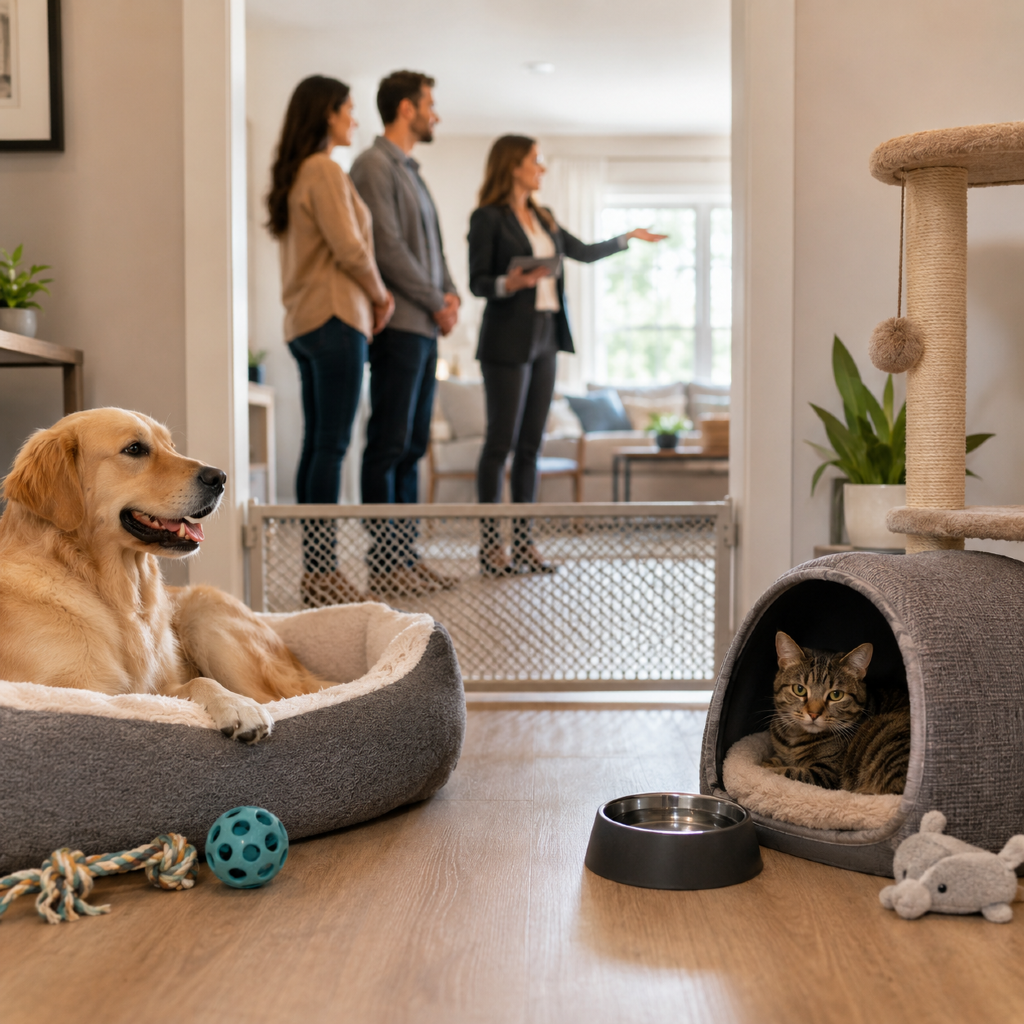
The priority is making sure your pet can’t run out or get injured. Double-check that collars and ID tags are secure. Block access to high-traffic doors with baby gates or confined spaces, and remove hazardous items your pet could reach—such as medication, small toys, or cleaning chemicals.
How Can You Reduce Showings Stress?
Preparing pets ahead of time
Preparation is your best defense against stress. Gradually introduce your pet to sights and sounds they may encounter during showings. Practice short periods away from home if you plan to remove them, or acclimate them to a designated safe room where they’ll stay during visits. Consistency with mealtimes, exercise, and attention can also help pets feel secure.
Calming techniques for animals
For some pets, soothing music or pheromone diffusers can ease anxiety. Provide favorite toys, familiar bedding, or interactive treats to create a comforting space. If your pet is particularly anxious, consult your veterinarian for additional advice tailored to their needs.
Safety vs. Stress Reduction: What’s More Important?
Balancing physical safety and comfort
Physical safety should always come first—an escaped or injured pet is a true emergency. However, stress reduction plays a vital role in maintaining your pet’s health and well-being. The challenge is finding an approach that maximizes both.
Often, combining safe containment (such as a crate or quiet room) with comforts (like blankets and toys) achieves the best results. Consider each pet’s temperament: a shy cat may prefer quiet seclusion, while a social dog might need distractions and exercise before or after a showing.
Factors influencing your decision
Pet species, age, medical conditions, and comfort with strangers all matter. For example, elderly pets or those with health issues may require more personalized care. The frequency and timing of showings, plus your own schedule, also play a part. Always observe how your pet responds and adapt your plan as needed.
Should Pets Stay or Go During Showings?
Options for temporary relocation
If possible, the lowest-stress option might be to take pets offsite during each showing—perhaps to a friend’s house, a pet daycare, or for a walk with a trusted neighbor. This prevents any chance of escape or unwanted interactions with buyers, and gives you peace of mind.
Planning around pet routines
If offsite relocation isn’t practical, designate a specific room for your pet with water, bedding, and a toy. Let your agent know this room is occupied, and post a clear sign on the door. Try to schedule showings around your pet’s regular routine when possible—for example, after a morning walk. The more closely you stick to their normal schedule, the less likely they are to feel unsettled.
How to Prepare Your Home for Showings With Pets
Cleaning and removing pet odors
A fresh, odor-free home is vital for a good first impression. Vacuum carpets and furniture, sweep up pet hair, and wash bedding regularly. Consider using an enzyme cleaner designed for removing urine and other animal smells. Air out the home before showings and open windows when possible for maximum freshness.
Protecting your pet’s belongings
Don’t forget your pet’s needs while organizing spaces. Store food bowls, toys, and litter boxes neatly or out of sight to create a tidy appearance for buyers, but ensure your pet still has access to them before and after visits. Having a portable carrier or crate accessible is helpful for quick transitions.
What If You Have Unusual Pets?
Considerations for exotic animals
Exotic pets like reptiles, birds, or small mammals present unique needs. Check that cages or tanks are securely closed and that temperature-sensitive pets remain comfortable. Some buyers may be unfamiliar (or uneasy) with these animals, so be mindful of where enclosures are placed.
Communicating with potential buyers
Transparency goes a long way. It’s helpful to inform your listing agent or anyone showing the property about the presence of unusual pets so they can forewarn visitors. This avoids surprises, allows buyers to plan appropriately, and keeps everyone safe.