Key Takeaways
- You can estimate your home’s value for free using online tools, recent sales data, and public records.
- Multiple approaches and careful comparison improve accuracy when valuing your property independently.
Knowing the value of your home empowers you to make informed decisions—whether you’re selling, planning, or simply curious. In 2026, several free methods exist to help homeowners estimate their property’s worth accurately, using online tools, local data, and official records. This guide breaks down each step so you can approach your valuation with confidence.
What Is a Home Valuation?
Definition and purpose
A home valuation is an estimation of a property’s current market value. This figure reflects what buyers are likely willing to pay for the home in the present market, taking into account its condition, features, location, and comparable sales.
Who typically requests home valuations
Homeowners commission valuations when considering selling, refinancing, insuring, or splitting property during life events. Real estate professionals, lenders, and insurance providers may also request valuations, but homeowners can perform their own research using free resources.
Why Accurate Valuation Matters
Impacts on pricing and decisions
An accurate estimation helps you avoid costly pricing errors. If your valuation is too high, your home may linger unsold. Too low, and you risk losing equity. It also guides your expectations for proceeds, potential negotiations, and next steps, such as repairs or staging before listing.
Common risks of over- or under-valuation
Overvaluing can prolong the selling process or require multiple price reductions. Undervaluing may lead to a quick sale but reduces potential returns. Both errors might impact financial planning, future purchasing power, or even refinancing outcomes.
How Can You Get a Free Valuation?
Online tools explained
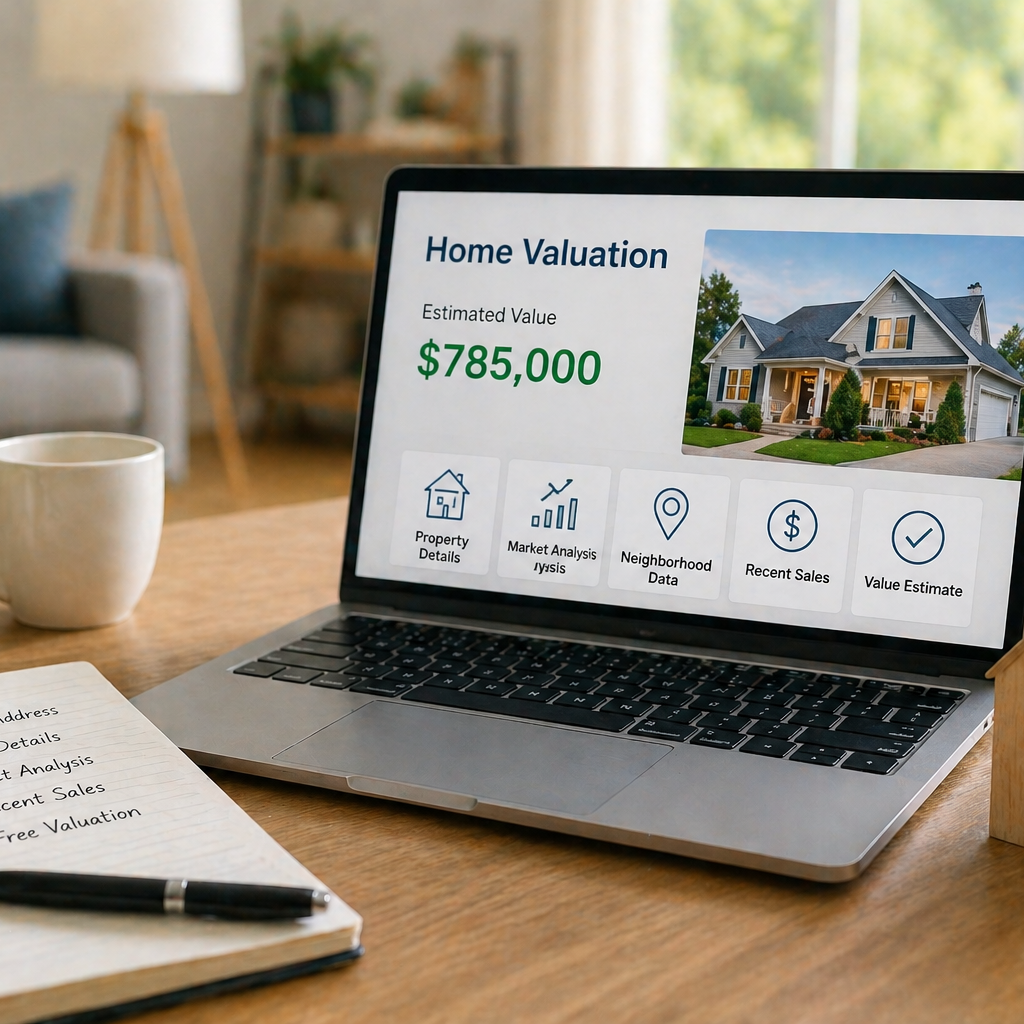
Many reputable websites offer complimentary property value estimates. By entering your home’s address and basic characteristics, you’ll receive an estimated price based on recent area sales and automated valuation models (AVMs). Examples include national portals and regional real estate platforms.
Community resources and public records
Local government offices and assessor’s websites provide property records for free. Some cities and counties offer online access to recent transactions and property tax assessments. Community centers, libraries, and neighborhood associations may maintain local sales data or offer workshops on understanding property value.
Comparing multiple valuation approaches
Rely on more than one method for confidence. Use at least one online tool, review public record data, and compare with prices of recently sold similar homes. This comparison helps spot outliers and create a reliable range.
What You’ll Need Before Valuing
Essential documents to gather
Prepare the following to ensure a thorough analysis:
- Most recent property tax assessment
- Past sale history of your home (if available)
- Recent appraisal, if conducted
- Photographs or notes on upgrades or major repairs
Details about your property
Collect accurate information on:
- Square footage
- Lot size
- Year built
- Number of bedrooms and bathrooms
- Structural updates or renovations
- Unique features (like pools, finished basement, or energy efficiency upgrades)
Step 1: Research Local Market Trends
Finding recent sales in your area
Investigate properties sold in your neighborhood within the last six to twelve months. Use public property records or real estate listing sites to target homes with similar size, features, and location. Focus on closed sales, not just asking prices, as these reflect actual market value.
Reading neighborhood price reports
Many local governments, broker associations, or regional news outlets publish market reports summarizing price trends, days on market, and neighborhood comparisons. Reviewing these can provide context for your property’s likely value range.
Step 2: Compare Similar Homes
Identifying comparable properties
Identify “comps” (comparable homes) that closely match your property in age, size, features, and proximity. The more similarities, the better the comparison. Look for homes within a few blocks or in the same school district, sold recently.
Adjusting for unique features
No two homes are identical. Note differences like extra bathrooms, finished basements, or significant yard upgrades. Adjust your estimated value up or down to reflect these distinctions, referencing local sales data for typical value adjustments.
Step 3: Use Online Valuation Tools
How automated estimates are calculated
Online valuation tools typically use automated valuation models (AVMs) combining recent sale prices, property characteristics, tax records, and broader market data. These systems analyze thousands of data points to project a probable value range.
Limitations of online valuations
While convenient and fast, AVMs may not reflect unique property details or recent renovations. Some tools may also lag behind current market conditions. Treat these estimates as data points, not definitive answers.
Step 4: Review Public Property Records
How to access free records
Visit your county assessor’s website, recorder’s office, or land registry to search for property records. Many now allow online searches by address, parcel number, or owner.
What information matters most
Focus on:
- Most recent sale prices for your address and nearby homes
- Assessed tax values (though these may not match market value)
- Past permits or additions, as upgrades can influence value
Carefully check records for accuracy and dates.
Step 5: Evaluate Your Findings
Reviewing your valuation range
Combine your findings from online tools, comps, and public records. Rather than pinpointing a single number, establish a value range (for example, $420,000–$440,000) based on your research.
Checking for common errors
Reassess any outliers, double-check your sources, and make sure adjustments reflect genuine property differences. Look for consistently similar results across methods for the best indicator of accuracy.
How Reliable Are Free Valuations?
Typical accuracy expectations
Free valuation methods, when carefully combined, often yield a credible price range. Variations of 3–8% from eventual sale prices are not unusual, due to market fluctuations, condition surprises, or buyer demand. Recognize online tools may not reflect unique home features or the newest market shifts.
When to seek professional opinions
If you need a valuation for legal, tax, or lending reasons, or if your findings show substantial uncertainty, consulting a licensed appraiser or local real estate professional can provide additional confidence. Otherwise, the approaches above offer strong, practical guidance for most selling or planning decisions.