
Key Takeaways
- Modern real estate photography in 2026 emphasizes technology, clarity, and highlighting a home’s unique features.
- Whether you DIY or hire a pro, knowing the essential shots and common mistakes helps maximize your listing’s visual impact.
Home photography is no longer optional—it’s essential for attracting buyer interest and helping your home stand out online. In 2026, updated photography trends and powerful digital tools can play a decisive role in how quickly your home sells and the attention it receives from prospective buyers.
What Is Real Estate Photography in 2026?
How home photography impacts buyer interest
If you’re preparing to sell, high-quality photos are your property’s digital handshake. Most buyers now start their search online and quickly scroll through multiple listings. Clear, inviting images can drive more views and make your home memorable. According to recent industry data, homes with professional-grade photography increase online engagement and can be viewed up to 50% more than those with standard or outdated images.
Changes in equipment and editing techniques
In 2026, camera technology and editing tools continue to evolve. Many real estate photographers use mirrorless cameras, drones, and 3D scanners to capture every angle. AI-powered editing streamlines image correction, helps balance lighting, and even stages rooms virtually—all to make your property look its best, while maintaining authenticity and accuracy.
Why Does Listing Photography Matter?
First impressions for buyers
You only get one chance at a first impression. When prospective buyers see your online listing, the visual quality either sparks interest or prompts them to move on. Strong photography helps buyers envision themselves in the space, generating positive feelings before they set foot through the door.
Implications for perceived home value
Well-composed and properly lit images suggest that your home is cared for and up-to-date. Conversely, blurry, poorly framed, or cluttered shots may create doubts about the home’s condition, influencing how buyers interpret your asking price—even if the physical space is appealing in person.
What Are 2026’s Must-Have Home Shots?
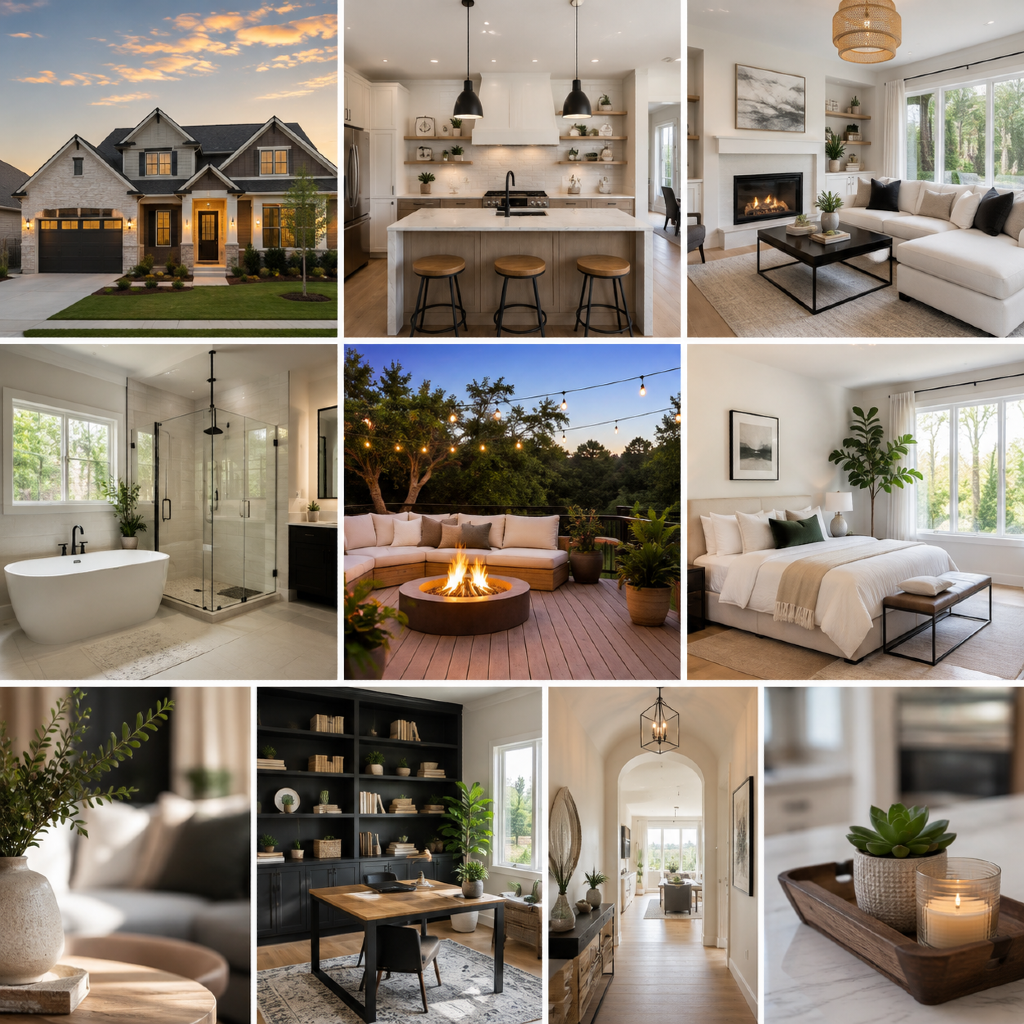
Essential interior photos
For interiors, buyers expect to see:
- Living rooms: Bright, wide-angle views showing layout and functionality.
- Kitchens: Clean, uncluttered spaces highlighting appliances, counters, and storage.
- Main bedrooms: Well-lit, welcoming shots emphasizing space and comfort.
- Bathrooms: Cleanliness, modern fixtures, and organized counters are key.
Good interior photos provide a sense of flow and scale, helping buyers plan their visit and imagine daily living.
Key exterior angles
The first exterior shot should capture your front façade in natural daylight, with landscaping visible and no cars in the driveway. Don’t miss angles that show:
- The backyard or garden
- Any patios or decks
- Side and rear views
- Additional features like garages or pools
These shots offer buyers a complete, honest sense of curb appeal and outdoor potential.
Specialty shots for current trends
2026 trends include:
- Flexible spaces: Highlight home offices, workout corners, or multi-use areas
- Smart home features: Subtly display modern tech, like built-in devices or energy-efficient appliances
- Eco-friendly elements: Solar panels, rainwater tanks, or native landscaping
- Lifestyle amenities: Game rooms, media areas, or outdoor kitchens
Focus on what makes your home unique, but avoid over-editing. Authentic representation builds trust and interest.
Which Rooms Attract Most Attention?
Kitchens and living areas
Buyers spend more time reviewing kitchens and living rooms than any other spaces. Prioritize clarity and cleanliness, using natural light and wide angles to make these rooms feel as spacious and inviting as possible.
Bathrooms and bedrooms
Bright, refreshed bathrooms with minimal countertop clutter draw the eye. Bedrooms should feel restful and organized, with beds made and personal items minimized. Keep the focus on room features, closets, and windows.
Outdoor and bonus spaces
Decks, patios, gardens, and even functional sheds can become selling points. Especially in 2026’s housing market, multipurpose and outdoor living areas remain in high demand.
How Are Digital Tools Changing Photography?
Virtual tours and 3D imagery
Interactive experiences are rapidly gaining popularity. With virtual tours, buyers can navigate your entire home online at their own pace. 3D imagery, which stitches together multiple shots, allows viewers to explore every direction and detail from their screen.
If you’re arranging photos, consider offering these as part of your listing to reach busy, remote, or out-of-town buyers.
Photo editing best practices
AI-assisted editing in 2026 efficiently removes minor distractions, balances brightness, and corrects perspectives. However, always aim for honest, realistic portrayals. Avoid altering images in ways that misrepresent the size, layout, or condition of any room.
Can I Take These Photos Myself?
Tips for DIY real estate photography
You don’t need to be a pro to make a difference. If you choose to photograph your home yourself:
- Use a smartphone with a high-quality camera or a basic DSLR
- Shoot in natural daylight and tidy up rooms before each shot
- Take wide-angle photos from corners to capture as much space as possible
- Avoid using heavy filters or exaggerated effects
- Check backgrounds for clutter, cords, or personal items
When to consider a professional
If you’re short on time, uncertain about camera settings, or your home has unique features (like high ceilings, large windows, or special lighting), working with an expert can help. Professionals often include drone shots, 3D tours, or virtual staging for a comprehensive package. If you go this route, ask for sample work to ensure it aligns with your goals and the latest trends.
What Photography Mistakes Should I Avoid?
Common pitfalls and oversights
Some frequent missteps include:
- Overexposed or underexposed rooms
- Crooked lines or tilted horizons
- Photos showing mess, pets, or safety hazards
- Missing key rooms or only photographing the home’s best angles
Consistent quality and a complete view of your property are vital for credibility.
Maintaining transparency and accuracy
Always present your home truthfully. Altering images to hide flaws or exaggerate features may lead to buyer disappointment and can undermine trust during showings. Stay within ethical guidelines by using editing tools to enhance, not mislead.